
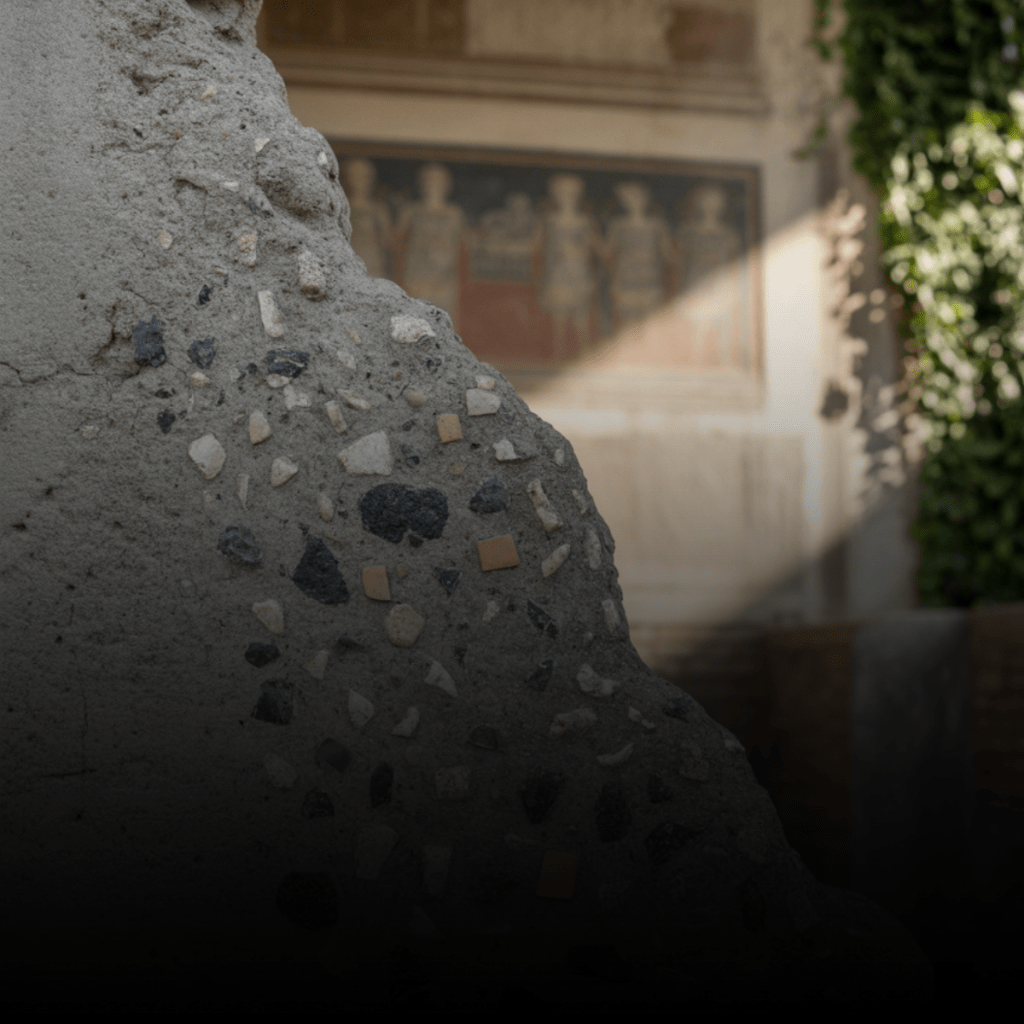
Roman concrete has stood the test of time, with structures like the Pantheon, aqueducts and sea walls still standing after 2,000 years. Inspired by this longevity, a team of researchers explored whether reviving Roman concrete mix design could offer a more sustainable path for modern construction.
The study, published in iScience, reveals a complex picture.

Durability vs. Emissions
While Roman concrete may reduce long-term maintenance thanks to its extreme durability, producing it today—using current technology—does not necessarily lower carbon emissions. In fact, the energy and CO₂ emissions per cubic meter are often comparable to or higher than those of modern concrete.
The Bright Spots
- Lower air pollution: Roman concrete production results in significantly lower nitrogen oxide (NOx) and sulfur oxide (SOx) emissions—up to 98% lower with renewable-powered kilns.
- Potential for sustainability: If Roman-style concretes last significantly longer (29%–3× longer, depending on application), their long-term carbon footprint may be equal to or even lower than conventional concrete.
Key Insight
The real climate advantage lies not in replicating Roman concrete outright—but in combining its longevity with modern decarbonization strategies, such as using biomass or electrified kilns powered by renewables.
“Using biomass and other alternative fuels to fire kilns may prove more effective in decarbonizing modern cement than implementing Roman concrete formulations alone.” — Martinez et al.
Bottom Line: Ancient Roman concrete isn’t a shortcut to low-carbon building, but its durability-first philosophy might hold valuable lessons for sustainable design.
Check out the full study here: https://www.cell.com/iscience/fulltext/S2589-0042(25)01313-6
Don’t forget to subscribe to stay up to date with the latest concrete information.


Leave a comment