
Waterless Concrete: Revolutionizing Construction on Earth and the Moon
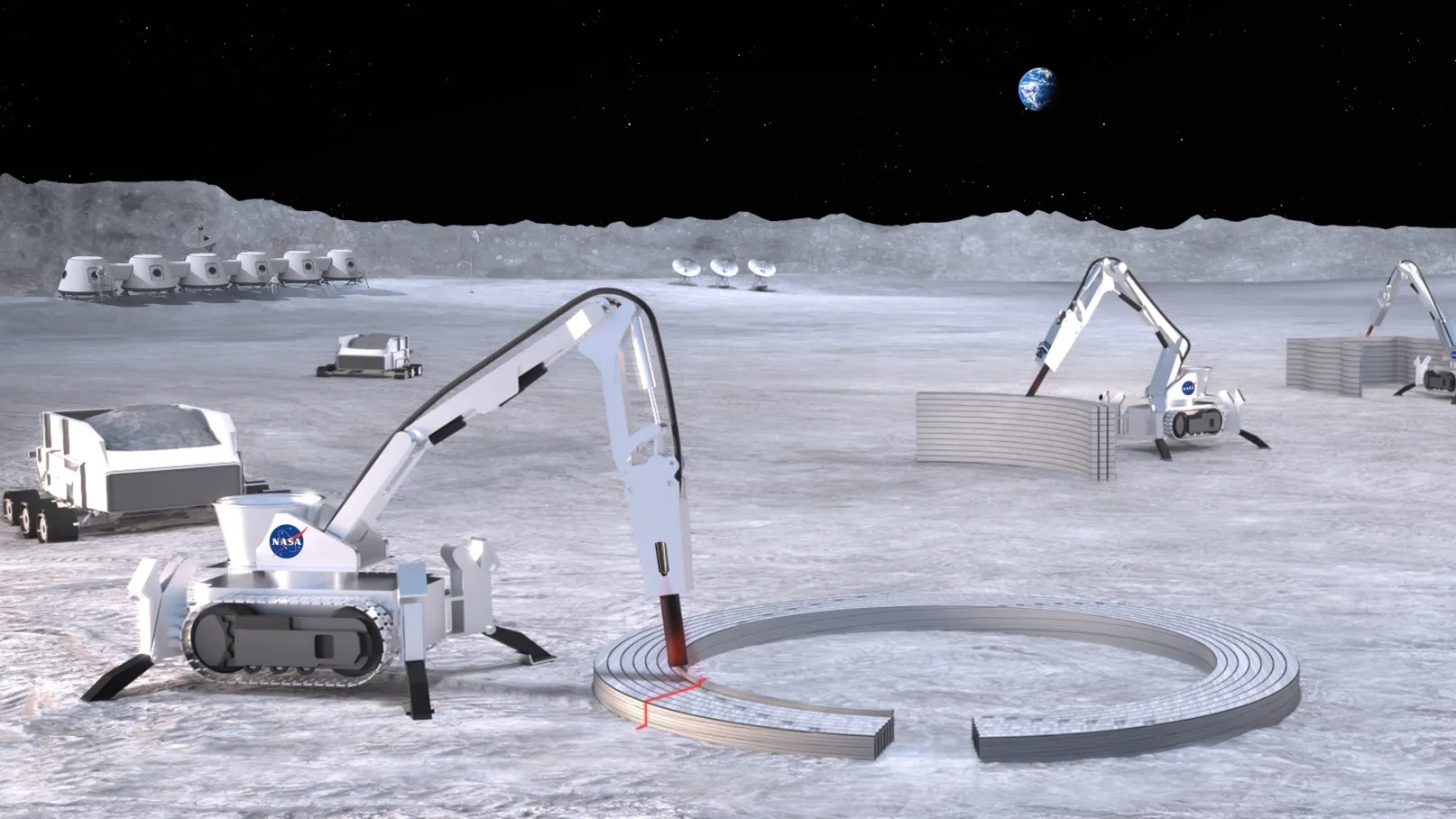
NASA’s ambitions for lunar exploration have inspired the development of a groundbreaking waterless concrete by researchers at Louisiana State University (LSU). This sulfur-based material uses molten sulfur to bind soil, eliminating the need for water—a vital but scarce resource in space.
3D-printable, fast-curing, and able to withstand extreme temperature fluctuations, this innovative concrete is perfect for constructing lunar infrastructure such as habitats, radiation shields, and landing pads. Testing in simulated lunar conditions shows it can endure the Moon’s harsh environment, and future missions aim to source sulfur directly from lunar soil, reducing the need for expensive Earth-based materials.
The material also has practical applications on Earth, offering sustainable construction options for water-scarce regions like the Middle East, where surplus sulfur from industrial processes can be repurposed. Its rapid-curing properties make it invaluable for disaster relief, military operations, and fast-paced construction projects in remote areas.
With NASA’s Artemis III mission set to explore the Moon’s south pole in 2026, this innovative concrete could be key to establishing a permanent presence on the Moon. Beyond space, it opens new possibilities for sustainable and efficient construction on Earth, addressing challenges in resource-scarce environments and beyond.
Full story: https://www.technologyreview.com/2024/11/29/1107536/moon-beginning-waterless-concrete/
Saudi Arabia’s Neom Advances Low-Carbon Concrete Innovation
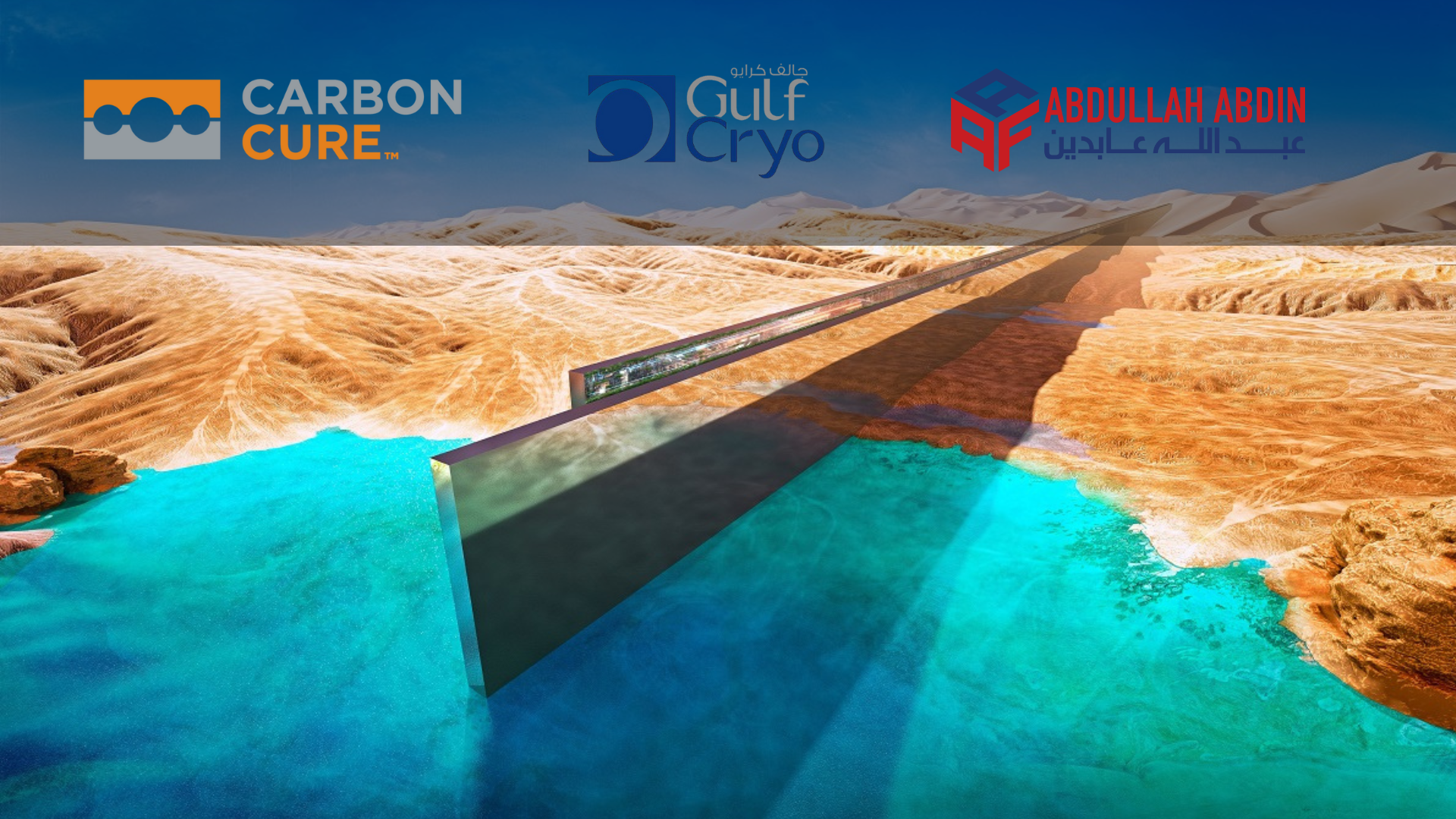
In a push toward sustainable construction, Saudi Arabia’s futuristic Neom city is integrating cutting-edge carbon capture and utilization (CCU) technologies. A new partnership between CarbonCure Technologies, Gulf Cryo, and Saudi construction firm Abdullah Abdin aims to produce low-carbon concrete for Neom’s ambitious projects like The Line and Oxagon.
Supported by the Saudi Ministry of Energy and aligned with Vision 2030, this initiative uses CarbonCure’s technology to mineralize captured CO2 within concrete during production. Gulf Cryo supplies the CO2, which is permanently trapped in the material, reducing embodied carbon by approximately 15 kilograms per cubic meter.
Neom is being developed as a global model for sustainable living, featuring renewable energy, innovative urban designs, and minimal environmental impact. The 10,000-square-mile project includes The Line, a 170-kilometer car-free linear city, and Oxagon, a floating city powered by green hydrogen and renewable energy.
Despite criticisms of greenwashing and slow progress, Neom’s adoption of low-carbon technologies highlights its commitment to reimagining urban development. By addressing the environmental impact of concrete—responsible for 8% of Saudi Arabia’s CO2 emissions—this collaboration sets new benchmarks for sustainable construction in the region.
A Cleaner Future for Concrete
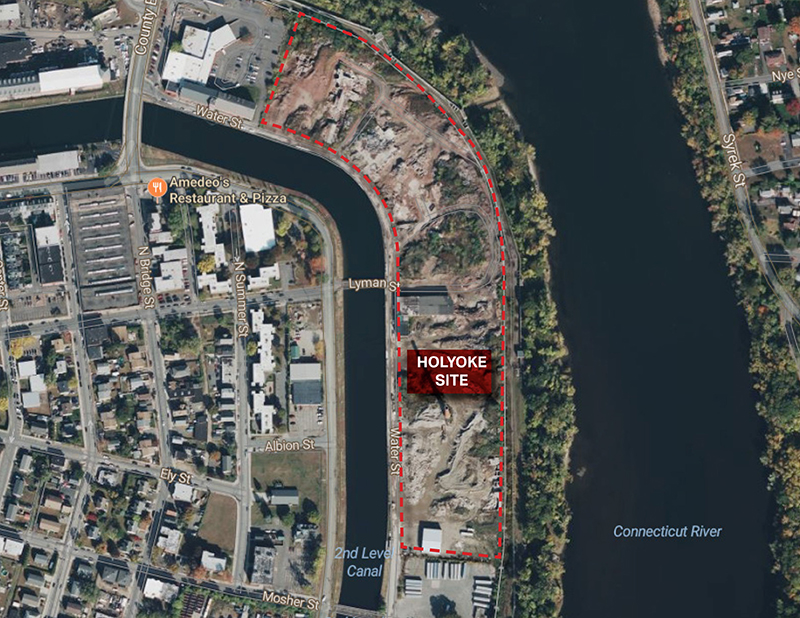
Sublime Systems is revolutionizing cement production with a breakthrough electrochemical process that eliminates the CO2 emissions and pollutants of traditional methods. Backed by up to $87 million from the U.S. Department of Energy, Sublime’s new plant in Holyoke, Massachusetts, will produce sustainable cement for concrete without relying on fossil fuels or limestone decomposition.
This innovation not only reduces the environmental impact of concrete but strengthens U.S. supply chains and creates 70–90 jobs in Holyoke. With partnerships from global leaders like Holcim and CRH, Sublime aims to scale its technology worldwide, paving the way for greener, high-performance concrete.
Full story: https://www.worldcement.com/the-americas/04122024/sublime-awarded-contract-with-doe-for-clean-cement-plant/
Transforming Waste into Sustainable Concrete
The University of Miami, in partnership with Miami-Dade County Water and Sewer Department, Titan, and Cemex, is turning lime sludge—a byproduct of water treatment—into a sustainable resource for concrete production.
Led by Dr. Ali Ghahremaninezhad, the research explores how lime sludge, traditionally a disposal challenge, can replace a portion of traditional cement in concrete. With a chemical composition similar to cement ingredients, the sludge is processed and blended to meet construction standards.
This innovation addresses two major challenges: reducing waste from water treatment plants and cutting carbon emissions from cement production, a major source of global CO2.
If widely adopted, lime sludge-enhanced concrete could revolutionize the construction industry, reducing its environmental footprint and paving the way for greener infrastructure.
Full story: https://news.miami.edu/coe/stories/2024/12/turning-wastes-into-building-blocks.html
Singapore’s New Concrete Facility Reduces Emissions and Boosts Efficiency
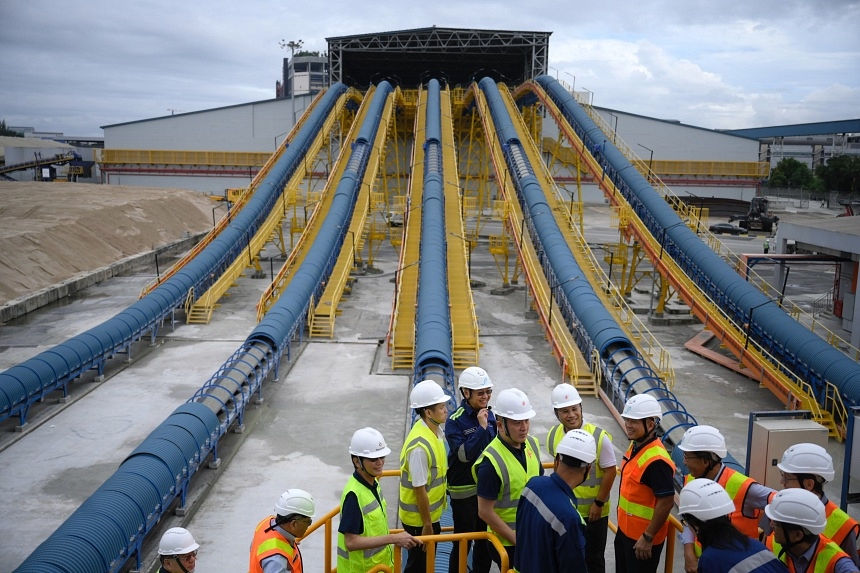
Singapore has unveiled a $200 million ready-mixed concrete (RMC) ecosystem at Jurong Port, streamlining concrete production while significantly cutting carbon emissions. Operational since September 2023, the facility uses conveyor belts to transport raw materials directly from ships to production plants, eliminating the need for over a million truck journeys annually.
Part of Singapore’s first integrated construction park, this innovation reduces transport time, enhances efficiency, and lowers environmental impact. By 2027, the park will expand to include an integrated construction and prefabrication hub (ICPH) and additional batching plants.
National Development Minister Desmond Lee emphasized the benefits of co-locating construction facilities, reducing logistical demands, and boosting productivity. Similar parks are planned, including one at Pulau Punggol Barat, to further transform Singapore’s construction sector and promote sustainable building practices.
Let me know what you think of these hot topics and any others you have come across!
Also, don’t forget to subscribe to stay up to date with the latest concrete information.
 Alen Keri
Leave a comment