

As sustainability becomes an increasingly important priority across industries, the construction sector is no exception. Concrete, the most widely used man-made material globally, plays a vital role in modern infrastructure. However, traditional concrete production significantly contributes to global carbon emissions, largely due to the energy-intensive process of producing cement, a key component of concrete. This has driven a growing focus on developing and adopting low-carbon concrete as a more environmentally friendly alternative. But what exactly is low carbon concrete?
The cement and concrete industries have made significant progress toward their ambitious goal of achieving net-zero carbon concrete by 2050. While this goal is bold, considerable advancements are already being realized in key areas such as the development of lower carbon materials, improvements in procurement practices, and innovative research and technologies.
However, despite these efforts, the term “low carbon concrete” is often used without a universally accepted definition. The upcoming American Concrete Institute (ACI) CODE 323-24 Low-Carbon Concrete which is currently being finalized, provides a generic definition for low carbon concrete of: “concrete designed with reduced upfront embodied global warming potential (GWP) compared to a benchmark and Tier 1 requirements of the Code.” While this provides a solid foundation, the definition is based on regional benchmarks and may not be universally applicable on a global scale.

This presents serious challenges for the industry as without a clear definition, it becomes difficult to establish consistent benchmarks and strategies for achieving this goal.
Low carbon concrete is formulated to minimize the carbon footprint linked to its production while preserving essential qualities like strength, durability, resilience, and workability. The reduction in carbon dioxide (CO₂) emissions throughout the production process is accomplished through various methods, including:
- Reducing Cement Content
Cement production is the primary source of CO₂ emissions in concrete. One of the most effective ways to lower the carbon footprint is to reduce the amount of cement used in the concrete mix design. This can be done by partially replacing cement with alternative materials, known as supplementary cementitious materials (SCMs) or optimizing the mix designs.
- Supplementary Cementitious Materials (SCMs)
SCMs, such as fly ash, slag, silica fume, or natural pozzolans, are industrial by-products or naturally occurring materials that can replace a portion of the cement in the concrete mix design. These materials not only reduce the amount of cement needed but also often improve the long-term durability and strength of the concrete.

- Optimized Mix Design
Engineers, scientists, researchers and ready-mix producers are continuously striving to optimize concrete mix designs to minimize the environmental impact. This involves strategies such as reducing the water-to-cement ratio, incorporating recycled aggregates, adding chemical admixtures, and developing more efficient methods for producing concrete.
- Alternative Binders
New technologies are emerging that use alternative binders, which either eliminate or drastically reduce the need for traditional cement. Examples include:
- Supplementary Cementitious Materials (SCMs)
- Natural Pozzolans
- Geopolymers
- Limestone Calcined Clay Cement (LC3)
- Recycled Aggregates
Utilizing recycled aggregates from crushed concrete sourced from demolished structures or returned concrete from ready-mix plants involves crushing, processing, and grading the original concrete for reuse in new concrete applications. By incorporating crushed concrete or industrial waste as aggregates, the demand for virgin materials is reduced, leading to a lower environmental impact in concrete production.
- Carbon Capture and Utilization
Innovative technologies are being developed that capture CO₂ emissions and use them in the production of concrete. One example is injecting captured CO₂ into fresh concrete, where it reacts with calcium ions to form stable calcium carbonate, which is permanently locked within the concrete. This not only reduces emissions but also can enhance the strength of the concrete.
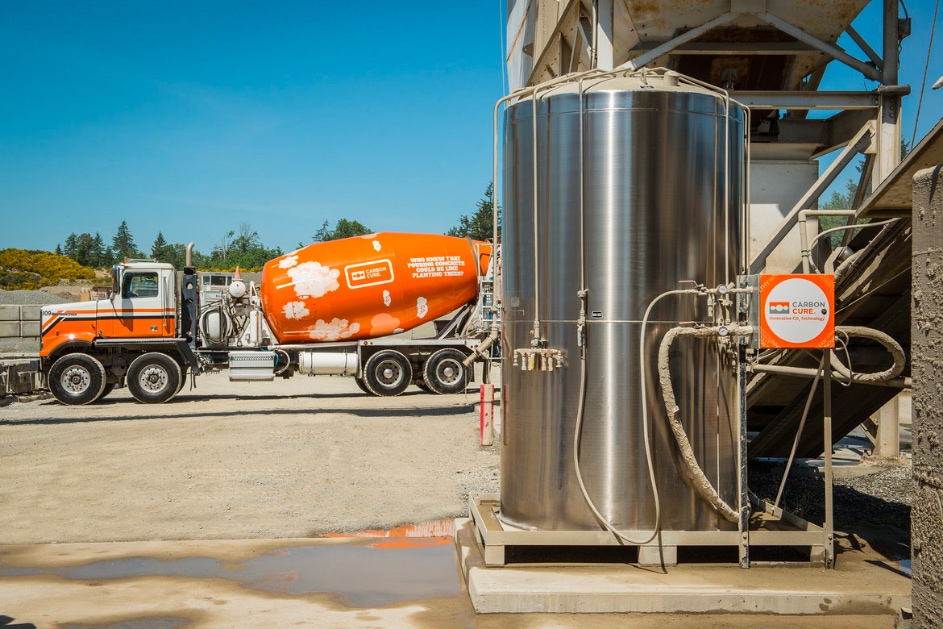
Many of these techniques have been employed in the concrete industry for decades, and the production of low carbon concrete is not a novel concept.
Historically, where has low carbon concrete been utilized for years without being specifically labeled as “low carbon concrete”?
Two key areas that have effectively utilized low carbon concrete are the LEED rating system and mass concrete applications.
U.S. Green Building Council’s (USGBC) LEED rating system has incorporated minimum supplementary cementitious materials (SCMs) replacement levels in numerous versions as a form to reduce the carbon footprint of the concrete used. This approach was in use long before the concept of low carbon concrete became a focal point of discussion, suggesting there is potential to leverage this process in establishing a clear definition for low carbon concrete.
In mass concrete applications, such as raft foundations, significant internal heat is generated within the structure, and if not properly managed, it can lead to thermal cracking. To address this, SCM (Supplementary Cementitious Material) replacement levels of 35-70% are often used. This not only helps prevent thermal cracking but also contributes to creating more sustainable, low-carbon concrete. Although low heat of hydration mix designs are not officially classified as low carbon concrete due to the absence of a formal definition, their role in reducing carbon emissions is considerable.

Having outlined what low carbon concrete is and its common applications in LEED-certified and mass foundation projects, the next logical step is to establish a clear definition of low carbon concrete. This is a challenge that the Global Concrete and Cement Association (GCCA) is addressing, as they will be hosting a webinar on October 15th to provide the industry with an opportunity to observe their efforts to define both low carbon cement and concrete for Green Procurement.
GCCA in collaboration with a wide range of stakeholders and global initiatives, has developed standardized definitions for cement and concrete, based on the International Energy Agency’s cement classifications. This webinar will outline the rationale behind the key decisions that informed these definitions, and demonstrate how they can be customized and implemented at national or regional levels to establish suitable decarbonization procurement targets. The webinar will also explore the opportunities and challenges involved in aligning these targets with the local progress already made in decarbonization efforts.

Following the webinar, the industry may gain a much clearer understanding of these definitions and how they can be used to set and achieve carbon reduction targets effectively.
Stay tuned for a comprehensive breakdown of the definitions for both low carbon cement and concrete.
In the meantime, what do you think the definition of “low carbon concrete” should be? Share your thoughts in the comments below, and don’t forget to share this post!


 Alen Keri
Leave a reply to Samy Abdelsalam Cancel reply